OPENING QUESTIONS:
1) Compare AND Contrast momentum with impulse
2) Compare the force to stop you (yourself) as a moving passenger in 1.0 s by an inflated airbag with the force to stop you at the same speed in .030s by the dashboard if the airbag does not inflate.
3) Why would it be a *bad* idea to build a mousetrap car with a balloon bumper to simulate an airbag?
FORMULAE OBJECTUS:
- p = mv
- J = F∆t = ∆mv = ∆p
- ∫Fdt = ∆p
- ∑F = dp/dt
WORDS O' THE DAY:
-
momentum (p)
impulse (J): "A measure of the degree to which an external force changes the particle's momentum". Note: Our book uses the term (I) to denote impulse, but that's not standard since (I) usually stands for the moment of Inertia (as we'll see in the next chapter). The AP Equation Sheet uses J to denote impulse.
conservation of linear momentum
- Newton's 2nd Revised: ∑F = dP/dt (the sum of the forces acting on a particle (or system) is equal to the change in momentum with respect to the time in which those forces acted)
- elastic collisions: Objects collide and then separate -- kinetic energy and momentum are BOTH conserved
- perfectly inelastic collisions: Objects collide and then stick together -- momentum IS conserved but kinetic energy is not
- inelastic collisions: Objects collide but do not stick together -- momentum IS conserved but kinetic energy is not
═══════════════════════════
WORK O' THE DAY:
Take a few moments to read 9.4 and work to get a VERY good understanding of:
- elastic collisions
- perfectly inelastic collisions
- inelastic collisions
How will you remember them? How will you incorporate them into your model?
═══════════════════════════
The LAB is going to be fairly difficult not the least of reasons being that this is your investigation. You do all the planning, testing, revising etc...
0) You (and by that I mean your group) will setup the parameters for this investigation:
- How closely (or not) will you try to model the conditions present in a Mars final stage landing?
Some aspects may be modelable, some may not.
- Note: Mars atmosphere is ~ 95 LESS dense than the Earth's atmosphere
- The Earth's atmosphere can be modeled as nitrogen gas (N2)
- Mars' atmosphere can be modeled as CO2.
- Mars' gravity is 3.71 m/s -- roughly 1/3g
- How will YOU define success and failure before you start the lab?
- I'd like to add a feature to the rubric to grade on creativity/problem solving. I'm going to ask you to create a line-item on the rubric to do that.
- I'm also charged with teaching you basic engineering principles. An important aspect of that is having you identify problems BEFORE you run your lab and pre-test approaches to solving those problems. Find out what you need to change/adjust/add/edit then try again and readjust again. That WILL be part of your write-up in a special engineering section.
- Here are a couple of very substantial problems *I* have identified for you. They are by no means the only problems/hurdles you will find in this lab:
1) How will you measure the impulse, change in momentum, force, acceleration etc...
2) Remember, you MUST backup your observations ("THE OCCUPANTS SURVIVED!") with data. That means if you make a really big cardboard box, stuff it full of cotton, put the egg in the middle, drop it off the sky bridge.... YAY, the egg survives, but you have no way at all (that I can think of) to measure the forces/momentum/acceleration/velocity-- whatever-- of the egg. Hmmmmm
Please setup a shared google doc with your teammates and begin addressing these issues over the weekend. Please share that with me today so I can monitor (ahem) your progress.
-
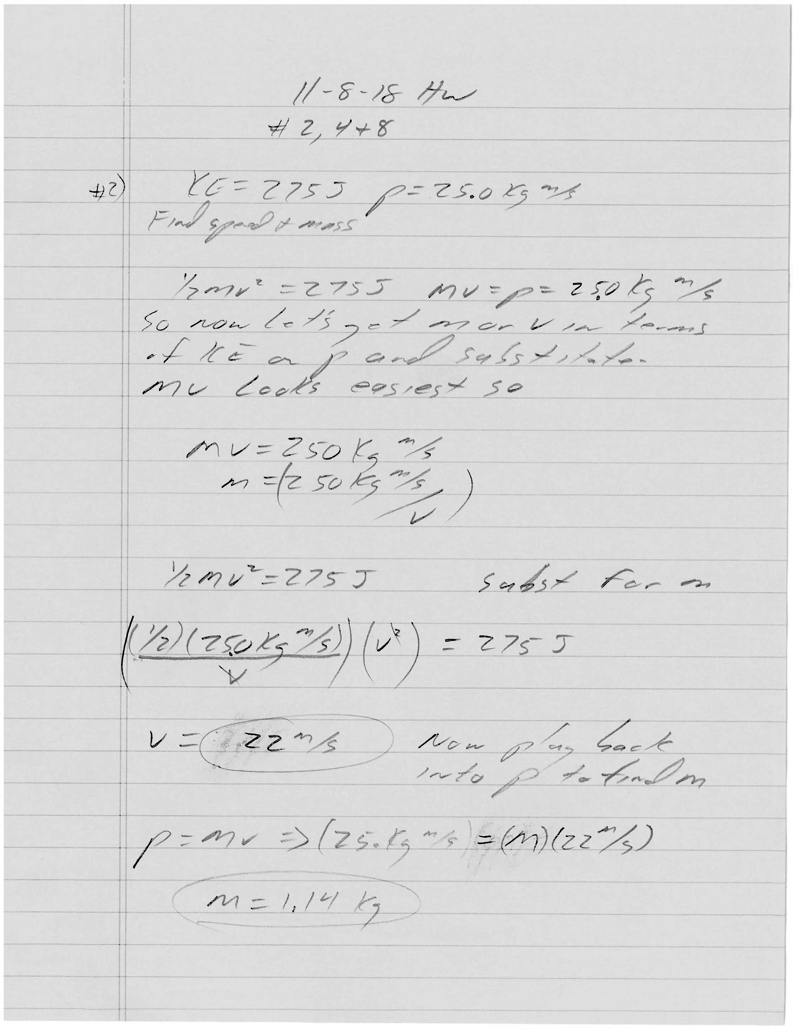
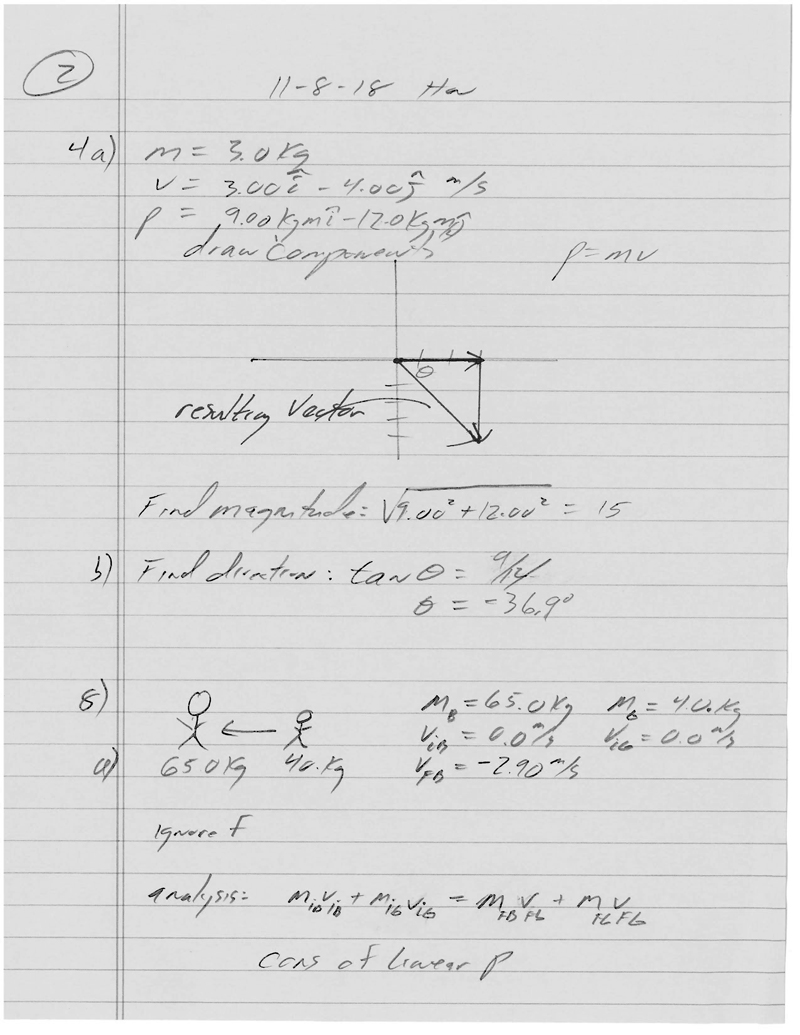
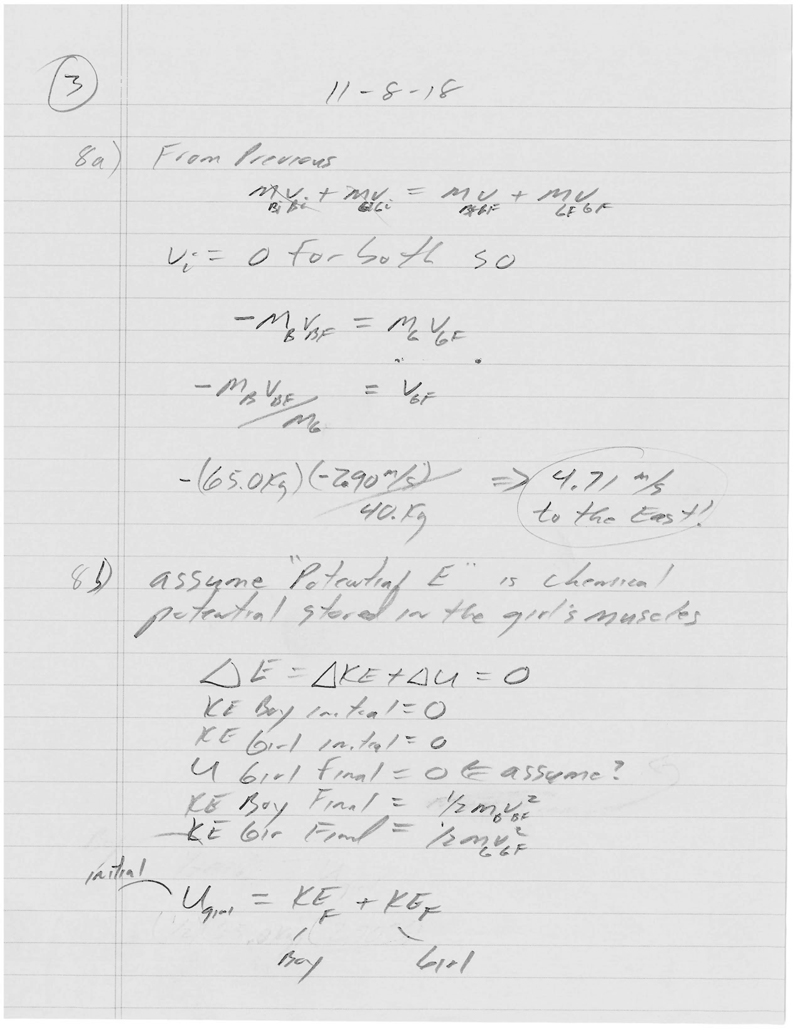
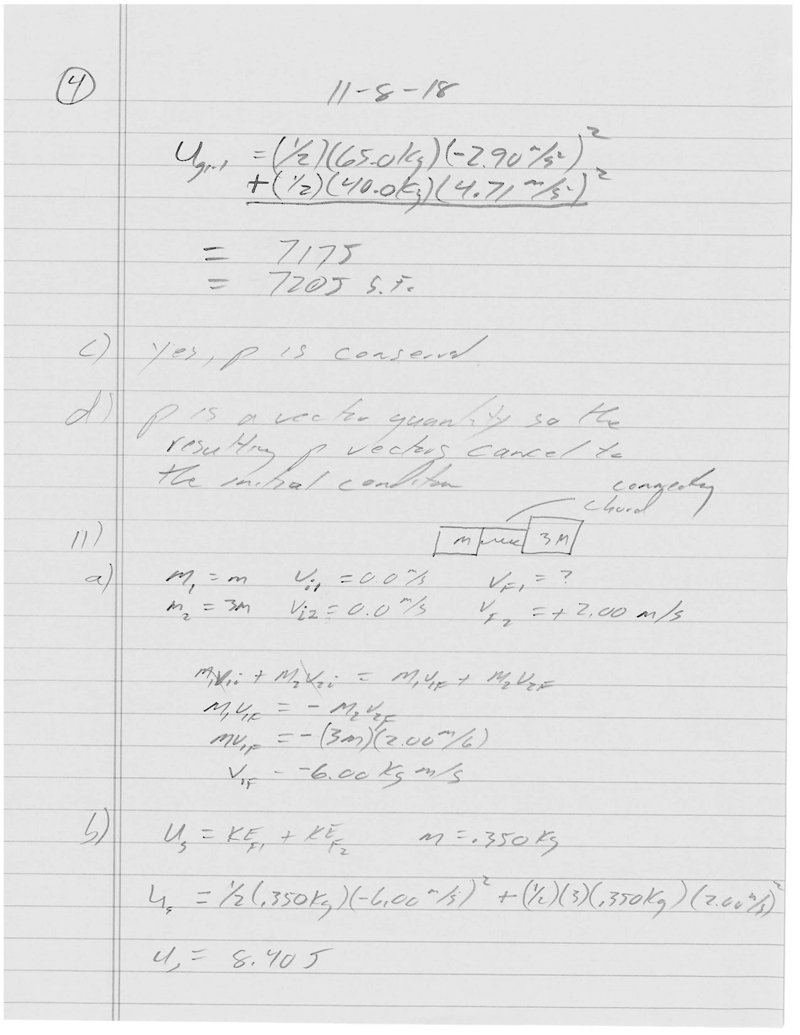
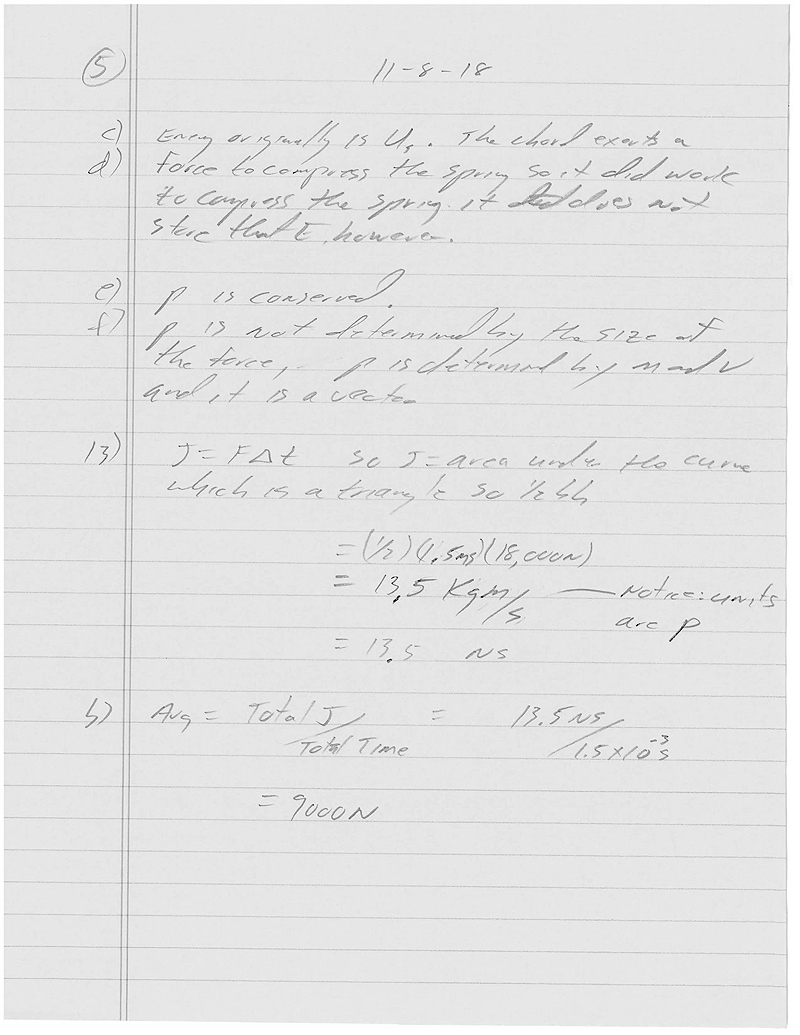
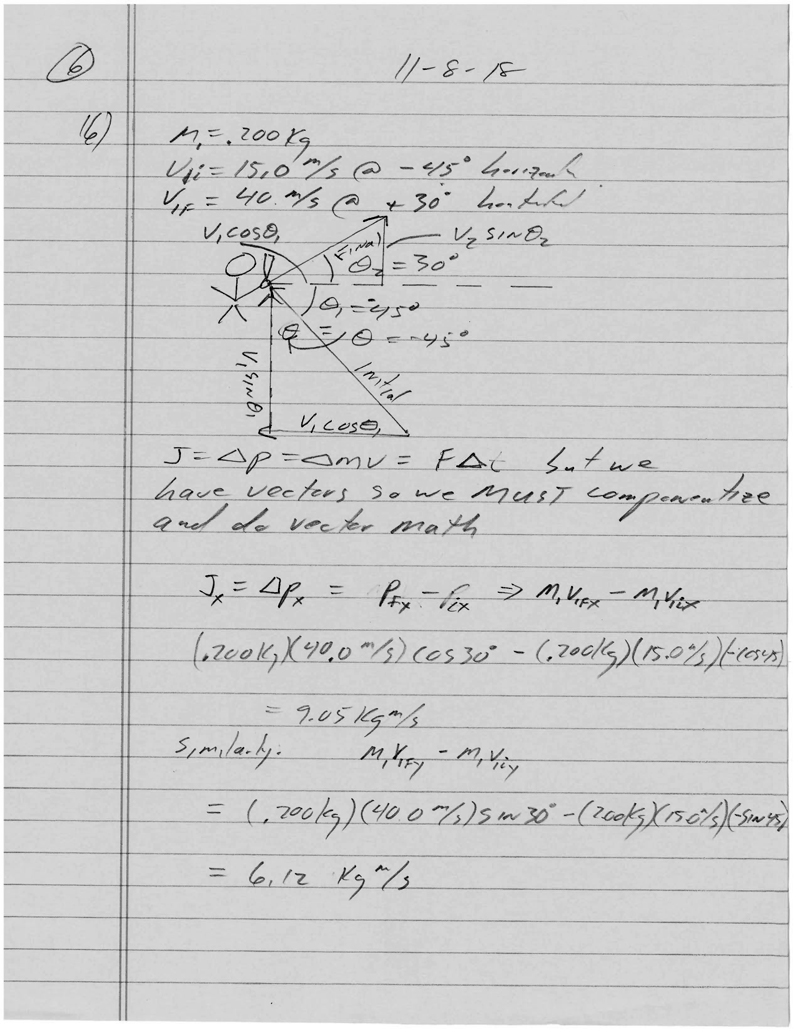
HOMEWORK (est minimum time: 90 - 110 minutes): Conceptual problem #1 on page 282, Problems 2, 4, 8, 11, 13, 16 begining on page 283